The Long Walk Home
A Heart Story
Nobody told Gunner that Bear was getting old. Nobody had to.
He noticed things. That was the part most people didn’t understand about Gunner — they saw the goofball, the food thief, the ninety-pound wrecking ball who couldn’t herd a chicken to save his life. But Gunner noticed things. He noticed when someone was sad. He noticed when the boys were fighting before anyone raised a voice. He noticed when Dad sat a little too long on the porch staring at nothing.
And he noticed when Bear started to change.
It was small at first. Bear had always been slow — he was old, grumpy, and had never once in his life been in a hurry to do anything except eat and claim his spot on the porch. But one morning, Gunner watched Bear walk into the doorframe. Just barely. Just a slight bump of his shoulder against wood that had been in the same place for years. Bear shook it off with a grunt, the way he shook off everything, and kept walking.
But Gunner saw it.
Then the sounds started to matter less. Dad would call Bear’s name from across the yard and the old brown mutt wouldn’t even turn his head. Not because he was ignoring Dad — Bear had always been world-class at ignoring people, it was practically his hobby — but because he didn’t hear it. The ears that used to swivel like satellite dishes at the sound of a treat bag crinkling three rooms away now stayed flat and still.
Bear’s eyes went cloudy, the kind of milky blue-gray that made the world look like it was behind frosted glass. He could still see shapes. Movement. Light and dark. But the details were leaving him, one by one, like the last guests at a party nobody wanted to end.
And through all of it, Gunner was there.
Bear had never liked Gunner. That was important to understand. From the day Dad brought home a squirming black Lab puppy with more energy than sense, Bear had made his position clear: this is my yard, that is my porch, and you are an idiot.
He’d growled when puppy Gunner tried to play. He’d turned his back when Gunner brought him sticks. He’d claimed every dog bed, every sunny spot, every square inch of prime real estate in the house, and Gunner — big, dumb, happy Gunner — had just… let him.
Because Bear was the alpha. Always had been. And even as a puppy, Gunner understood that in a way that went deeper than training. It was respect. Pure and simple. Bear was first through every door. Bear ate first. Bear chose the spot, and Gunner took whatever was left.
It had been that way for years.
And it stayed that way, even when Bear couldn’t see the door anymore.
The hikes were the hardest part to watch.
The family had always walked the property together — Dad and the boys out front, the dogs roaming the trails, Tiger appearing and disappearing like a striped ghost in the brush. Bear had never been fast, but he’d always been steady. He knew every root, every dip, every turn in the path like he’d drawn the map himself.
But now he wandered.
He’d be walking with the group and then just… drift. A sound he couldn’t quite place would pull him left. A shadow he couldn’t quite see would make him hesitate. He’d stop and stand, head slightly tilted, trying to make sense of a world that was getting quieter and blurrier by the day. And the family would be twenty, thirty, forty yards ahead before anyone noticed.
Anyone except Gunner.
The first time it happened, Dad turned around and saw Gunner standing beside Bear on the trail, both of them stopped, Bear’s nose working the air for clues about where everyone went. Gunner wasn’t barking. Wasn’t bouncing. Wasn’t doing any of the things Gunner normally did. He was just standing there, close enough that his shoulder almost touched Bear’s shoulder, waiting.
“Would you look at that,” Dad said, quiet enough that only Mom heard.
When Bear started walking again — slowly, cautiously, his paws feeling for the ground like it might disappear — Gunner walked beside him. Not ahead. Not behind. Beside. Matching the old dog step for step, adjusting his pace to something that must have felt like slow motion for a dog who usually ran at two speeds: full sprint and asleep.
When Bear drifted toward the tree line, Gunner drifted with him, then gently angled his own body so Bear corrected course back toward the trail. No barking. No nudging. Just presence. Just a warm black shape in Bear’s foggy peripheral vision that said this way, I’m right here, this way.
Dad watched this happen three more times before his eyes got blurry too, and not because of any medical condition.
The boys noticed it next.
“Dad, Gunner’s being weird,” the middle one said one afternoon, looking out the window at the yard.
Dad came to look. Bear was standing in the middle of the yard, stock-still, head slightly raised. He’d lost his bearings again. The porch was to his right, the fence was behind him, and the door was straight ahead, but Bear didn’t know any of that anymore. He was just standing in the geography of his own confusion, too proud to bark for help, too stubborn to panic.
And there was Gunner, walking slowly across the yard toward him. Not running. Walking. When he reached Bear, he didn’t jump or paw or do any of the annoying things Bear had spent years growling at him for. He just stood beside the old dog and faced the house.
Bear turned his head toward Gunner. Sniffed. Found the familiar smell — the one constant in a world that kept rearranging itself — and took a step forward. Then another. Gunner walked with him, shoulder to shoulder, all the way to the porch steps.
At the steps, Bear hesitated. He couldn’t see them well, and the last time he’d misjudged a step, he’d stumbled and it had taken him a long, embarrassing moment to get up.
Gunner went up first. One step. Then stopped. Waited. Bear found the first step with his paw, pulled himself up. Gunner took the next step. Waited again. Step by step, like a seeing-eye dog who had never been trained for the job but had figured it out anyway because somebody needed him to.
When they reached the porch, Bear found his spot — the same spot he’d claimed for years, the shaded corner near the door — and lowered himself down with the careful, creaking effort of a body that was running out of easy days.
Gunner lay down beside him. Not on top of him. Not in his space. Just close enough to touch.
Bear let out a long, slow breath. The kind that sounds like a dog settling in for good.
And Gunner stayed.
Tiger watched all of this from his usual perch on the porch railing.
Tiger had never liked Bear. This was mutual and well-documented. Bear had chased Tiger off the porch, out of the kitchen, away from food bowls, and once straight up a fence post that Tiger stayed on for two hours out of spite. Bear didn’t want Tiger in his space, and Tiger — who had survived coyotes and cold nights and the disappearance of his mother — was not about to take orders from a grumpy old mutt with bad hips and worse manners.
They coexisted the way countries coexist when they share a border and don’t like each other — with distance, suspicion, and the occasional territorial dispute that ended with a growl and a hiss and someone leaving the room.
So what Tiger did next surprised everyone. Including Tiger.
He jumped down from the railing, crossed the porch, and curled up against Bear’s other side. Not on Bear — Tiger had never slept on Bear, never wanted to, never would. But beside him. Close enough to touch. Close enough to feel the old dog’s ribs rise and fall.
Bear between Gunner and Tiger, bookended by the two animals who had spent years avoiding each other but who understood, in this moment, that some things are bigger than old grudges.
Bear’s tail moved. Just once. Just barely. A single slow wag against the porch boards.
Tiger would never admit why he did it. He’d deny it if cats could deny things. But he stayed.
The vet visits got more frequent. The medicine bottles on the counter multiplied. Dad had conversations with Mom in low voices after the boys went to bed, the kind of conversations that ended with long silences and no good answers.
Gunner didn’t understand medicine or vet visits or the quiet math parents do when they’re measuring an animal’s pain against its dignity. But he understood Bear. He understood that the old dog was slower today than yesterday. That the walks were shorter. That Bear slept more and more, and that each time he lay down, it took him a little longer to get back up.
So Gunner did the only thing he knew how to do. He stayed close.
When Bear ate, Gunner waited. Still. After all these years, Bear ate first. That hadn’t changed. That would never change.
When Bear walked to the yard, Gunner followed three steps behind, close enough to help, far enough to let the old dog keep his pride.
When Bear couldn’t find his water bowl — the same bowl, in the same spot, that he’d been drinking from for years — Gunner walked to it first and stood there, a black landmark in Bear’s fading world, until Bear followed the sound of lapping water and found it too.
Nobody trained Gunner to do any of this. There’s no YouTube video for it. No manual. No command.
It was just love. Big, dumb, patient, loyal love from a dog who most people thought couldn’t find his way out of a paper bag.
Turns out, Gunner could find his way to anything that mattered.
The last walk was short.
Just down the trail behind the house and back. Dad walked slow. Bear walked slower. Gunner walked beside Bear the whole way, that gentle shoulder-to-shoulder pace they’d developed, the one that let Bear feel where he was going without having to see it.
The boys came too. All three of them, quieter than usual, because kids understand more than adults think they do.
Tiger followed at a distance, doing that cat thing where he appeared on a fence post, disappeared, then reappeared on a rock ahead like he’d teleported. But he was there. He was always there.
Bear made it to the end of the trail and back. He stood on the porch for a long time after, nose raised, smelling the forty acres of Virginia mountain he’d patrolled and guarded and complained about since they’d arrived. The land he’d claimed with every grumpy bark and territorial growl, the same way he’d claimed every piece of land they’d ever lived on. His last kingdom.
Then he lay down in his spot.
Gunner lay down beside him.
Tiger appeared and settled against Bear’s back, one last time.
And the porch was quiet in the way that only a family homestead in the Virginia mountains can be quiet — crickets and wind and the slow creak of old wood and the breathing of three animals who’d figured out something most people spend their whole lives trying to learn:
You don’t have to like someone to love them.
You just have to show up.
Bear passed on a Tuesday in Virginia, a long way from the Texas land where he’d spent most of his grumpy, glorious life. The family had carried him across states, through moves and chaos and upheaval, because that’s what you do. He was family. He was the original. The alpha.
Gunner looked for him for three days after. Checked Bear’s spot on the porch. Sniffed his bed. Stood in the doorway and looked out at the yard like he was waiting for the old brown mutt to come grumbling around the corner, annoyed about something, as usual.
Tiger sat in the spot where Bear used to sleep. Just sat there. Not sleeping. Just sitting. For a cat who never seemed to care about anything, it was the loudest silence in the house.
On the fourth day, Gunner found one of Bear’s old toys — a chewed-up, flattened thing that barely qualified as a toy anymore. He carried it to Bear’s spot, set it down, and lay beside it.
Mom found him there an hour later and sat down on the porch floor next to him. She didn’t say anything. She just put her hand on his head and left it there.
Tiger came and lay against Gunner’s side.
The three of them stayed like that until the sun went down.
Time does what time does. The sharp edges of missing someone get softer, worn smooth like river stones, until the sadness becomes something you can carry without it cutting you. The family talked about Bear — laughed about his grumpiness, his territorial bark, the way he’d look at you like you’d personally insulted him just by existing.
And Gunner — big, goofy, food-obsessed Gunner — carried something forward from Bear that nobody expected.
He’d learned how to show up.
Not just for the treats, not just for the pets, not just for the food that fell off the table. He showed up for the hard stuff too. The quiet stuff. The stuff that doesn’t wag its tail or fill your bowl.
Maybe that was Bear’s last gift. The grumpy old alpha who never liked anyone teaching the big dumb puppy the most important thing a dog can learn:
Being there is enough.
You don’t have to fix it. You don’t have to understand it. You don’t have to herd a single chicken successfully.
You just have to stay.
And Gunner always, always stayed.
For Bear. Grumpy, glorious, unforgettable Bear. He didn’t like anyone in his yard. But he let them stay anyway.
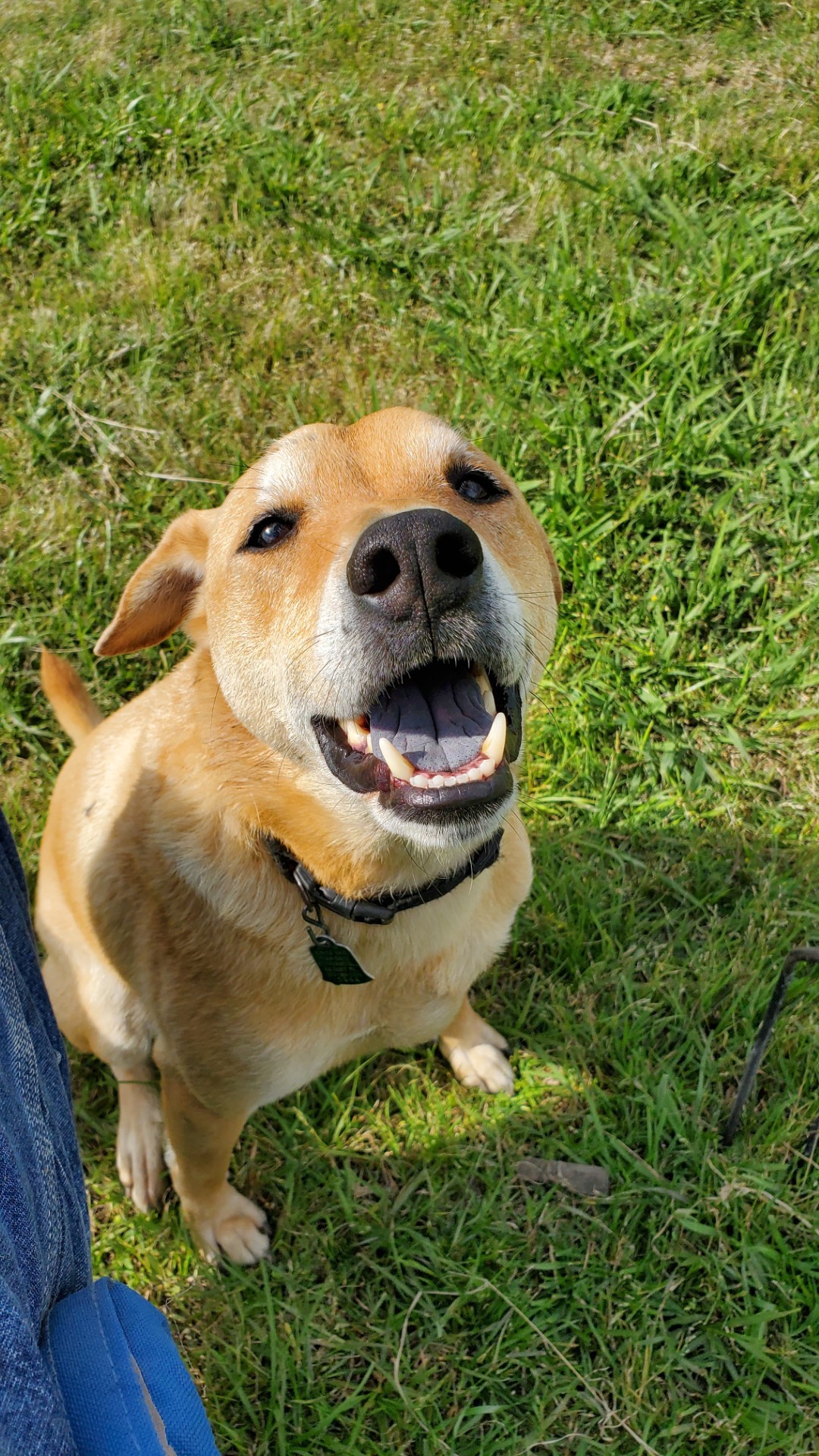
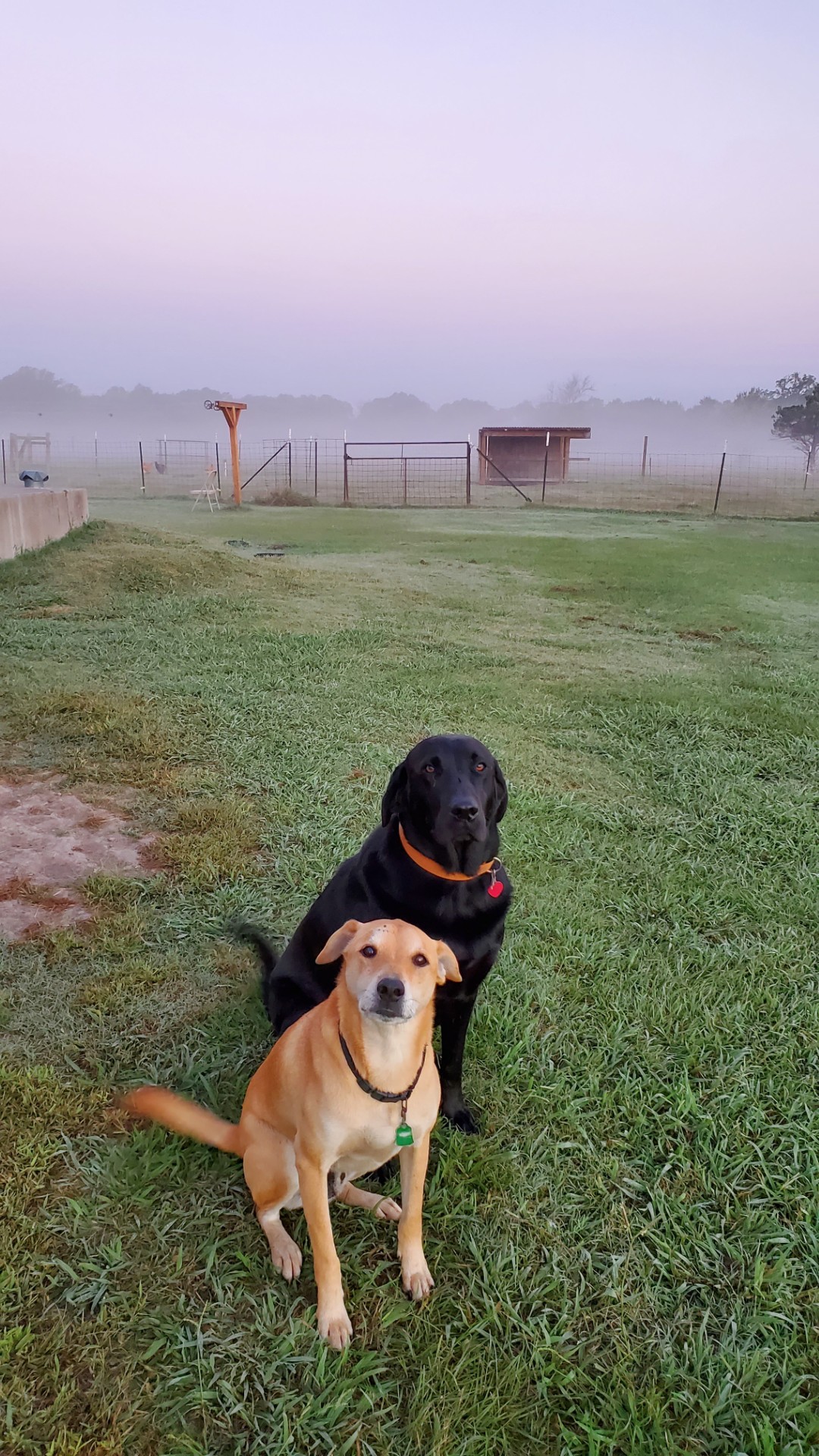
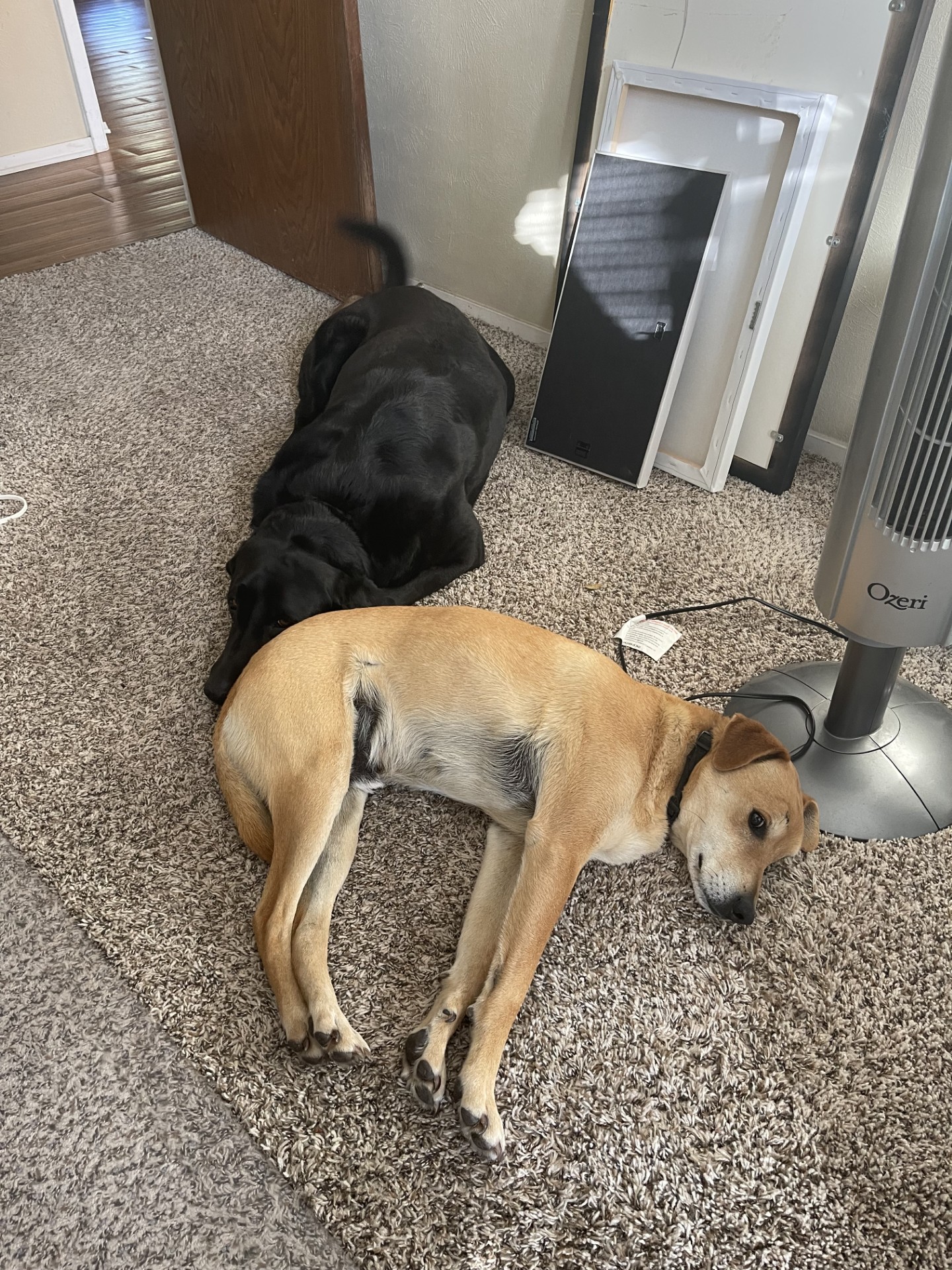
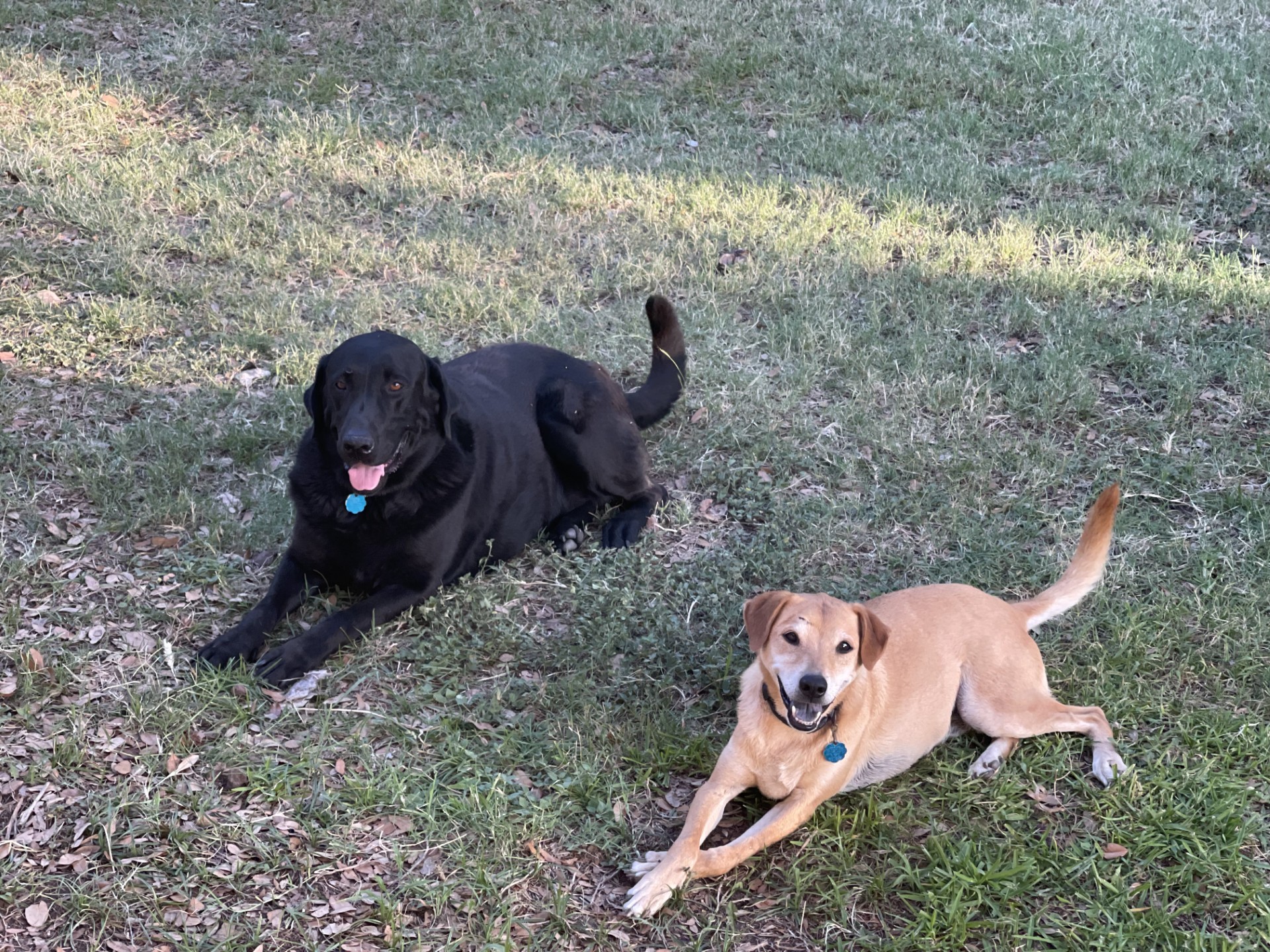
The Real Bear