The Voyage Home, Going East
Phoenix, Arizona. Late 2016.
Before there was Gunner, there was Bear.
And before there was a homestead in East Texas, there was a house in Phoenix, Arizona, the biggest house the family would ever live in, before or since. It sat on a cul-de-sac in a nice neighborhood, the lot a little larger and a little more private than most. The yard was well-manicured, with big lemon and tangelo trees, real grass, and a pool surrounded by palm trees. It was, by any reasonable measure, a beautiful place to live.
Dad stood in the driveway one fall afternoon in 2016, looking past the cul-de-sac and out toward the edge of the subdivision, and thought a thing he had been thinking, quietly, for almost a year:
I want out of here.
It wasn’t a dramatic thing. There was nothing wrong with the house. The house was great. There was nothing wrong with Phoenix. Phoenix had been good to the family. All three boys had been born there, in a hospital in Glendale: the oldest in 2010, the middle in 2012, the youngest on the first of December, 2014. Dad had a good job. Mom had her people. The boys had a pool and a yard with actual trees, which was more than most kids in the city could say.
But the city was growing. Every month, another field disappeared. Every month, another stoplight. Every month, another row of identical beige houses where, the year before, there had been desert. The roads were getting more crowded. The grocery store on a Saturday morning felt like a parking lot with a building in the middle.
Dad had grown up in the country. Way out in the country. The kind of country where the nearest neighbor was a long walk and the night sky had so many stars it almost looked crowded. Somewhere along the way he had moved to cities for work, for life, for all the reasons you move to cities, but the tug had never gone away. It just sat in the back of his chest, quiet, patient, waiting.
That fall, the family went on an apple-picking trip.
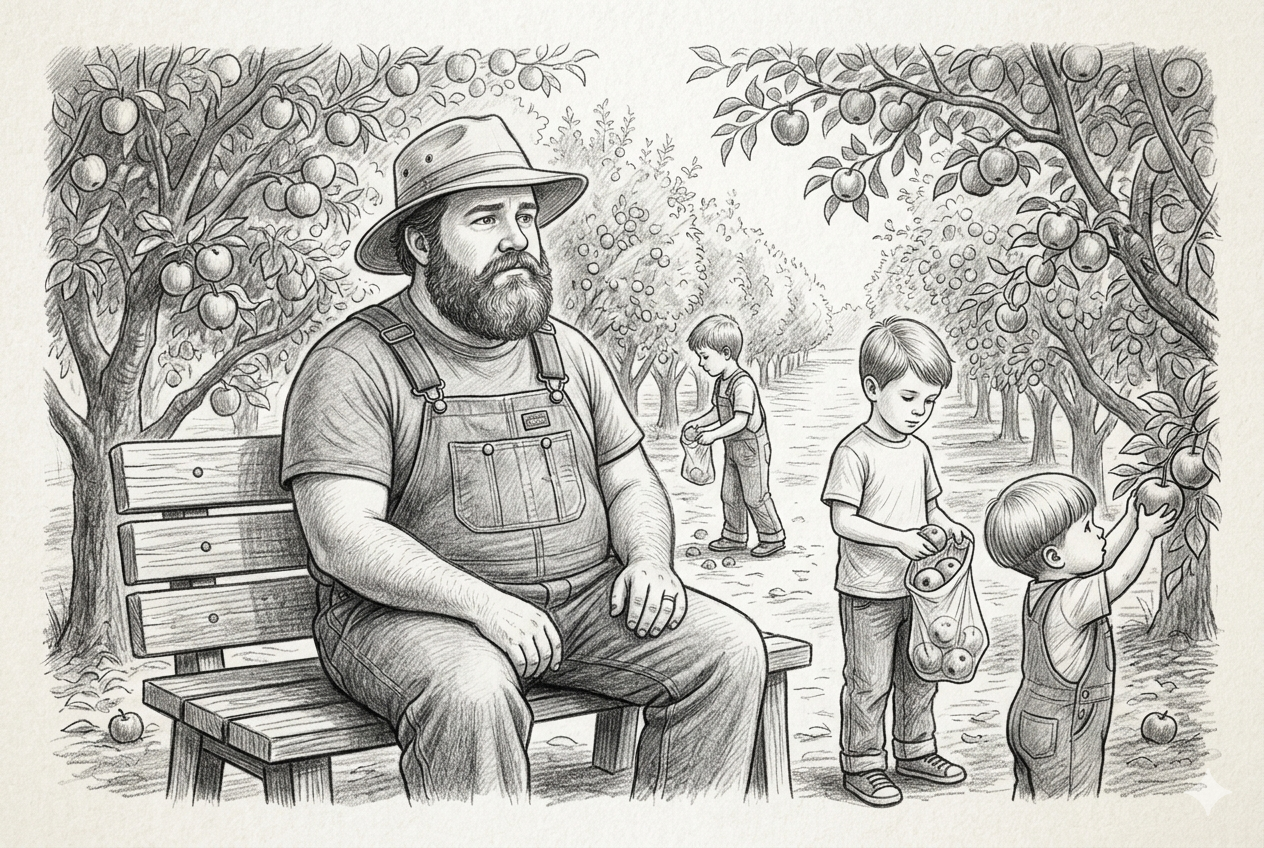
It was supposed to be just a fun day. A drive up to one of those orchards somewhere outside the metro, the kind of place city families take their kids on weekends so they can pretend, for an afternoon, that they live in a different kind of world. The boys were six, four, and nearly two. The youngest could barely reach the lowest apples. The middle one filled his bag with the worst apples on the tree because he liked the spotty ones. The oldest worked his way down a row with the methodical seriousness of a kid who would later become a workhorse, picking each apple, examining it, deciding, moving on.
And Dad stood there in that orchard, with the smell of apples and grass and cool air, watching his three boys run between the trees, and the tug in his chest pulled so hard he had to sit down on a bench.
Then, a few weeks later, the tipping point.
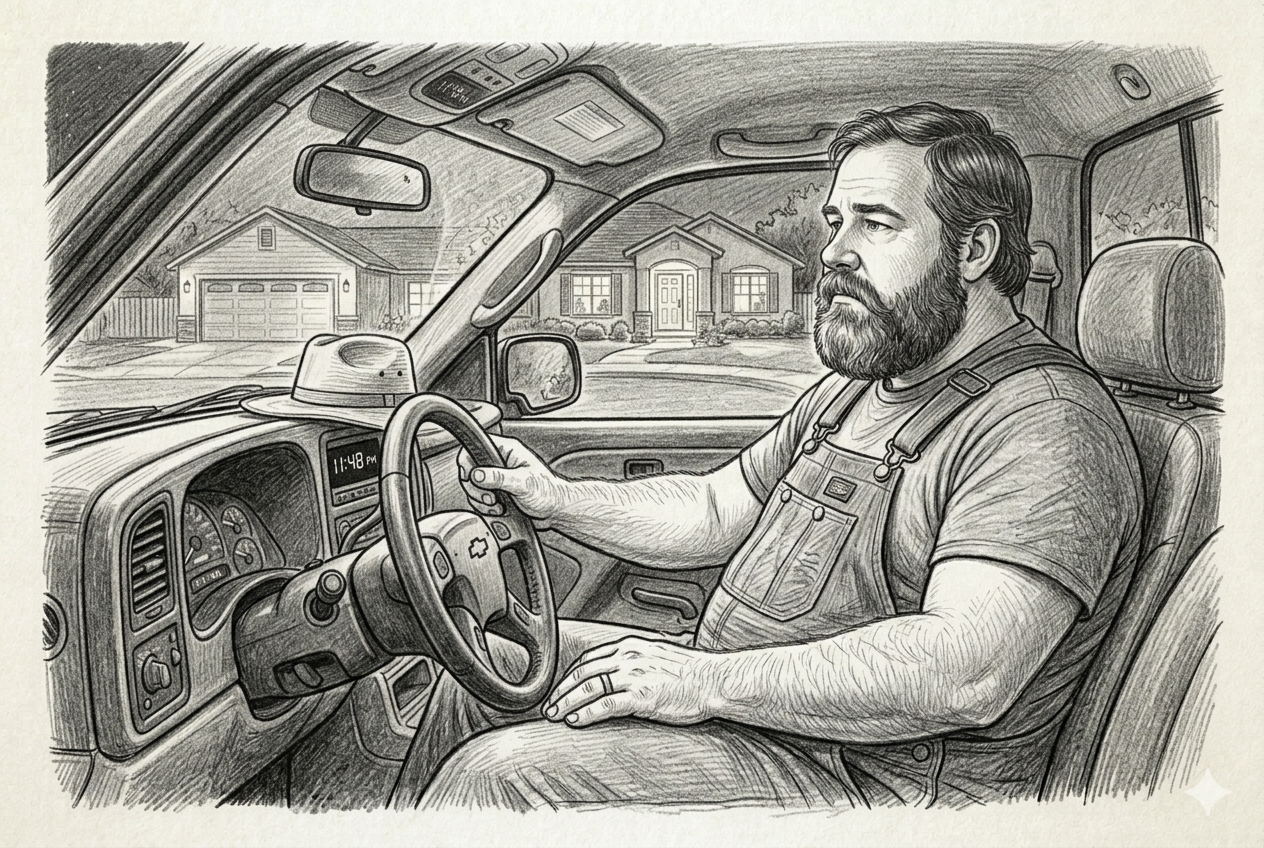
Dad’s commute home from the east side of town was normally about an hour. One night, thanks to construction, an accident, and the usual Phoenix crawl that was getting less unusual by the month, it took over two. Two hours of brake lights and concrete and the same half-mile of freeway over and over again. By the time he pulled into the driveway, the boys were already in bed and the house was quiet and he sat in the truck for a long minute with the engine off, staring at the steering wheel.
That was it. That was enough.
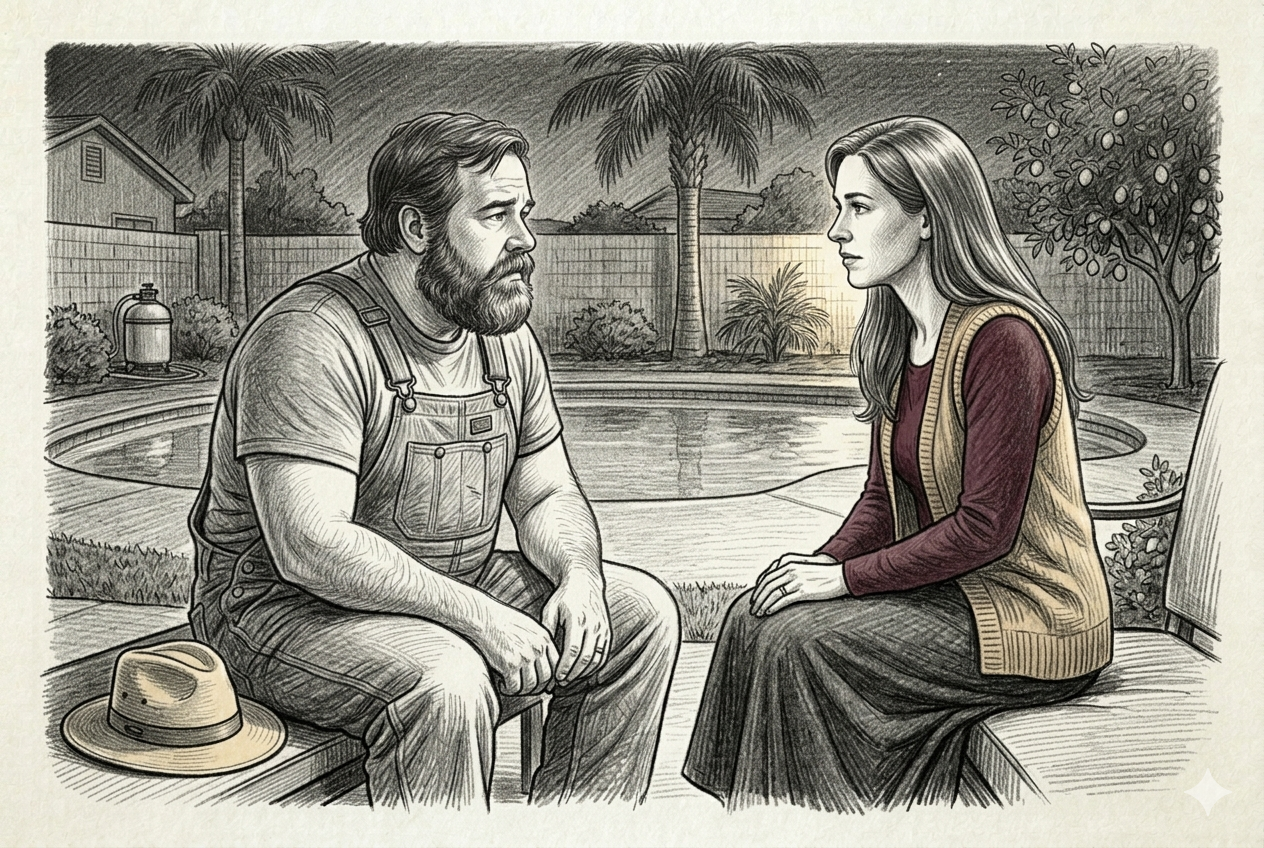
A few days later, Mom found him sitting on the back patio after the boys had gone to bed. She looked at him. He looked at her. She knew that face.
“You’re thinking something,” she said.
“I’m thinking a lot of things.”
“Tell me.”
He told her.
She listened the way she always listened. Completely, no interrupting, no jumping to conclusions, the steady attention of a woman who had been a teacher long enough to know that the most important thing you can do for a person is wait until they’re done talking.
When he was finished, she was quiet for a long moment. The pool filter hummed. Somewhere down the street, a neighbor’s dog barked once and stopped.
“Okay,” Mom said.
“Okay?”
“Okay. Let’s do it.”
And just like that, on the back patio of a house in Phoenix, after the boys were asleep and the city was finally quiet, the family decided to go.
The where took some figuring out.
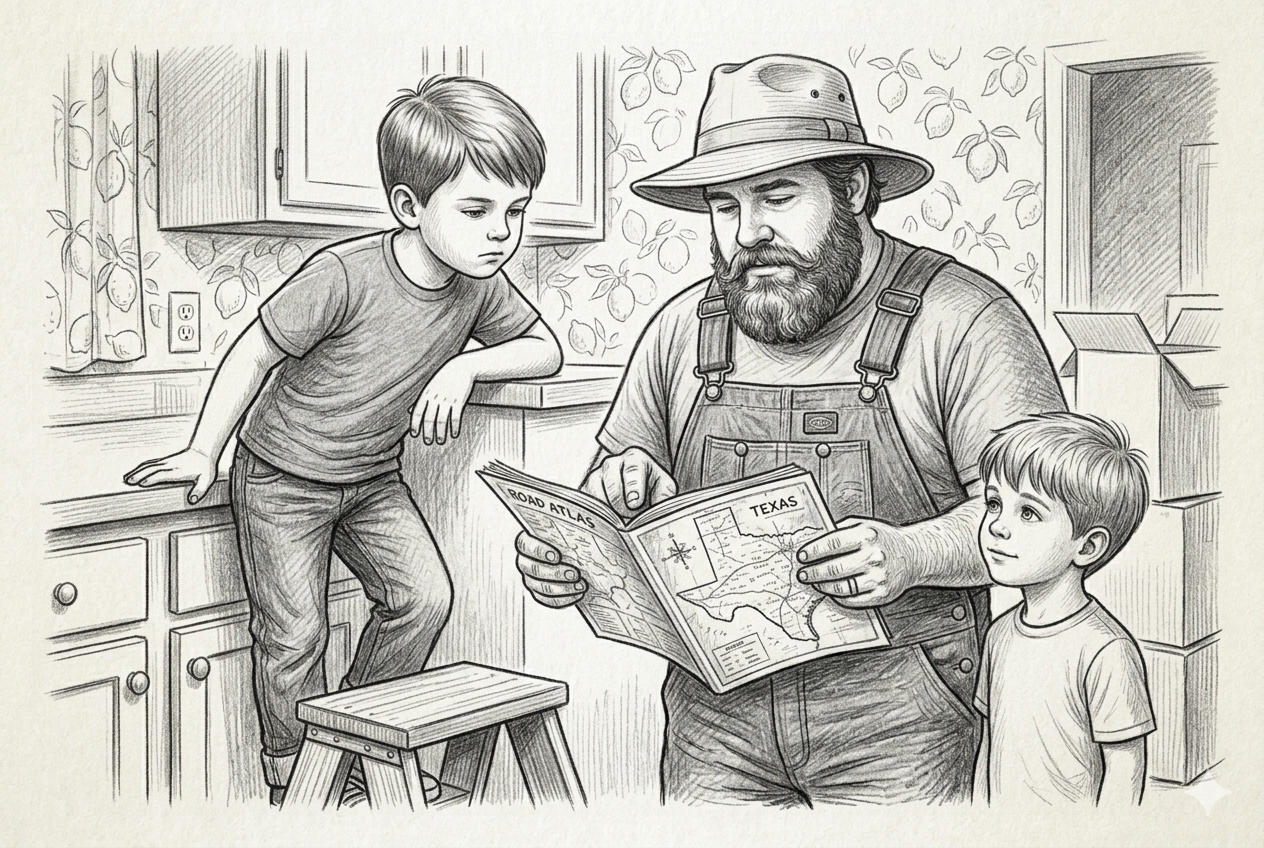
There were maps spread across the kitchen table for weeks. Dad’s maps, his laptop open long after everyone else had gone to bed, coffee gone cold beside it. Idaho came up first and got crossed off fast. They’d already done that particular kind of cold once, and once, it turned out, had been plenty. Colorado came up too, and got crossed off for a reason the family has quietly agreed, to this day, not to get into. Then, to everyone’s genuine surprise, Dad’s included, there was Texas. Even Texas. Not the dried-up, sun-bleached Texas of Dad’s own boyhood, all dust and mesquite and a sky that never gave an inch. The other Texas. Green. Creeks, pine trees, grass that stayed grass clear through summer. Texas it was.
The only thing left to work out was how much of it. Dad wanted hundreds and hundreds of acres, nobody for miles in any direction. Mom, who had never once in her life lived outside a city, wanted something more manageable, and not so far from at least one other human being. Dad dreamed big. Mom did the math. In the end, and it’s fair to say Mom’s math won, it came down to a fifteen-acre homestead with an old farmhouse, a barn, a pond, and enough fence to know that animals had once lived there and would live there again.
They put the Phoenix house on the market in the middle of October. It sold faster than anyone expected. But selling fast and leaving fast are two different things, and closing on a house takes about a month no matter how quick the offer comes, which set their real leaving date somewhere in early December and handed the family a strange, suspended few weeks of living in a house that wasn’t quite theirs anymore.
That window turned out to hold something worth staying for. The youngest’s second birthday was the first of December, and it didn’t feel right to slip out of town without it. So they stayed for it. There was a party with old friends, the people who had known the family since before there were three boys to keep track of, an afternoon of cake and paper plates and the particular ache of a goodbye you keep smiling through. Then, with the sale finally closed and the last of the hugs given, the moving truck was loaded and gone, headed east on its own schedule. Which meant the family had exactly one job left: drive themselves and one young brown mutt about eleven hundred miles across the desert, through the hill country, and into the piney woods of East Texas.
Two vehicles. Mom and the three boys in the minivan. Dad and Bear in the pickup, Bear riding shotgun the whole way east.
Bear, at this point in his life, was not yet Grandpa Bear. He was just Bear. A solid, brown, young mutt in the prime of his life, and a personality that could best be described as patient with reservations. He had been with the family since the oldest boy was a year old. He had survived the arrival of the middle boy. He had survived the arrival of the youngest boy, which had been harder. He had survived three small humans climbing on him, pulling his ears, dressing him in things, and once, memorably, trying to ride him like a horse.
The grumpy old dignity that would one day make him Grandpa Bear was already in him somewhere, in seed. But that was a long way off, years of it. For now he was young and strong, and mostly he just had opinions.
Here’s a thing worth knowing about Mom, because it explains a lot about the way Bear looked at her.
She’d grown up a cat person. Never once, in her whole childhood, had there been a dog in the house. Just cats, a rotating cast of them, the standoffish kind that decided when they wanted love and when they most certainly did not. She reached her twenties without ever once loving a dog.
Her first dog ever came the year before she met Dad: a rescued German Shepherd named Jack. Good dog. Not a mean bone in him. But nervous. Deeply, permanently nervous, the kind of nervous a dog gets when the world hands him reasons to flinch before it ever hands him reasons to trust. Dad met Jack out on a hiking trail, back when he and Mom were still just friends, which is a sentence that gets funnier every year the family tells this story. Jack didn’t warm up to strangers. Jack didn’t warm up to anyone. Jack took one look at this calm, unhurried man on the trail and decided, on the spot and without consulting anybody, that he was allowed to like him.
Mom noticed that. A nervous dog who trusted no one, choosing this particular man in about four seconds flat. She filed that away as the kind of thing that means something, and she was right.
But Jack’s nerves never settled. They grew instead, the way some things do no matter how much love gets poured on them, until it became clear, gently and sadly, that Jack needed a home with more time and more quiet than Mom could give him yet. He went to live with a family who had both. Right decision. Still a hard one.
Which made Bear only the second dog Mom had ever loved in her whole life. She was still learning dogs, one heart at a time, the way you learn anything unfamiliar, slowly, and a little carefully. Bear, who noticed more than he ever let on, seemed to understand that about her. He never asked her to be anything other than what she was. He just liked her back.
It wasn’t the same as how Bear felt about Dad (nothing was ever going to be the same as how Bear felt about Dad), and it wasn’t quite the same as how he felt about the boys, who did him genuine, specific wrongs on a regular basis and were forgiven every one of them before they’d even finished apologizing. Dad first. The boys second. Mom third.
Mom knew this. Mom had made her peace with it a long time ago. She was the one who fed him, after all, and there is a particular kind of security in being third on a list you’re allowed to be on at all.
Dad opened the passenger door of the pickup. Bear looked at the seat. Bear looked at Dad. Bear looked at the seat again, with the expression of a dog who had not been consulted about any of this and who was reserving the right to file a complaint later.
“Come on, buddy. Long road ahead.”
Bear sighed, a long, slow, eloquent sigh, and climbed up into the passenger seat. He arranged himself with great dignity. He did not look out the window. He did not wag his tail. He simply sat, facing forward, like a co-pilot who had received his briefing and did not approve of the mission but would carry it out professionally.
In the minivan, behind them, Mom was performing the kind of pre-flight check that only mothers of small children can perform. Snacks: secured. Water bottles: filled. Wet wipes: stockpiled. The youngest’s stuffed animal: located, loaded, double-checked. The middle one’s notebook and colored pencils, for drawing whatever creature he’d decided was hiding out there in the desert that day: present. The oldest’s book: present, with a backup book, because the oldest read fast and Mom had learned the hard way what a six-year-old without a book on hour seven of a road trip looked like.
The boys were strapped in. The youngest in his car seat. The middle in his booster. The oldest in the back, the unofficial general of the third row.
Mom looked in the rearview mirror.
“Y’all ready?”
Three small voices, in unison: “Yes ma’am.”
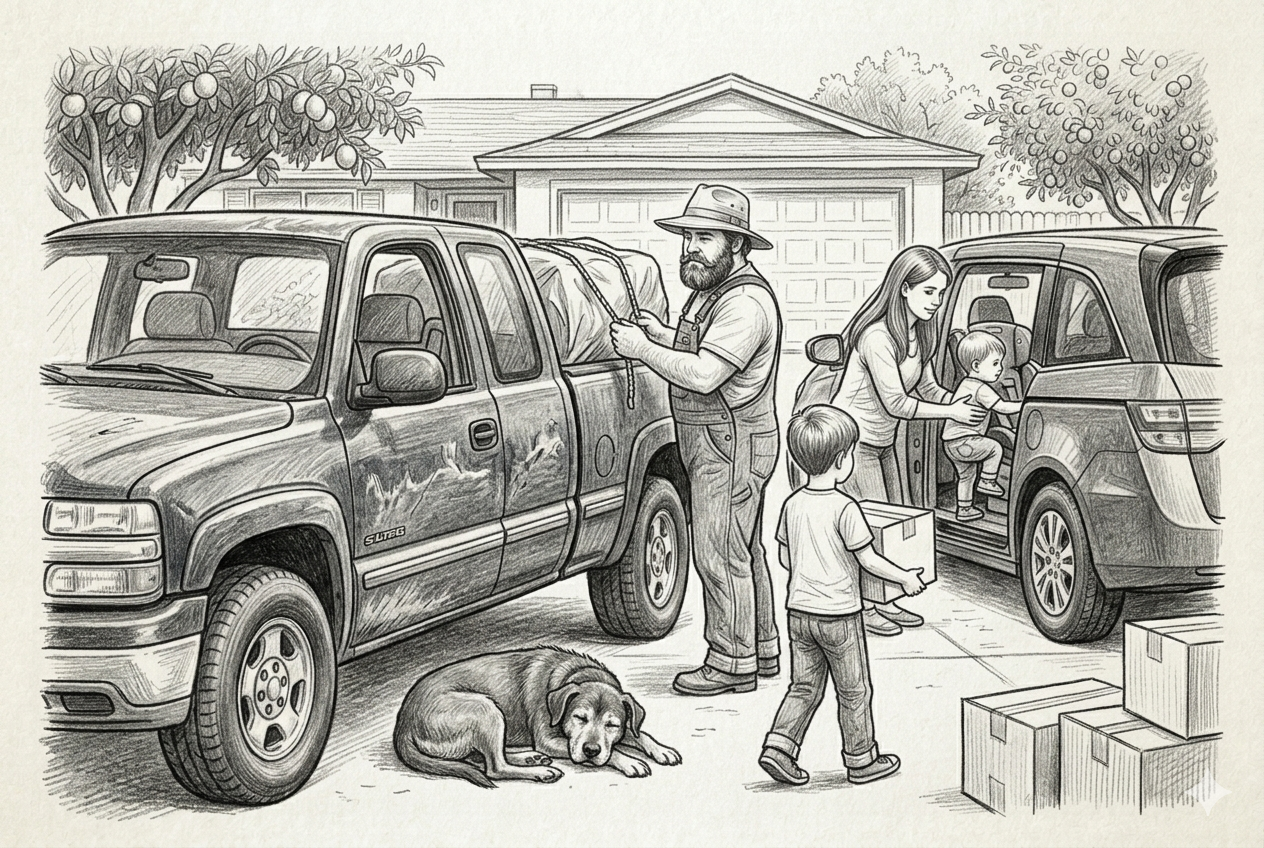
She started the van.
In the truck ahead of her, Dad started the truck. Bear continued to face forward, unmoved.
And then, slowly, carefully, the way you start any journey that you are going to remember for the rest of your life, they pulled out of the driveway in Phoenix for the last time.
The first hour was beautiful.
Everyone sang. The youngest sang loudest, even though he didn’t know any of the words to anything. The middle boy made up his own song about a herd of wild horses running alongside the van, with lyrics that did not rhyme and did not make sense and went on for approximately eight minutes. The oldest read his book. Mom drove and smiled into the rearview mirror at the chaos behind her and felt, for the first time in months, like the decision had been the right one.
In the truck, Dad rolled the window down. Cool, dry December air came in, nothing like the furnace blast of a Phoenix July. Bear’s nose twitched once and then went still. Bear was not interested in desert air. Bear was waiting for trees.
Hour two was still pretty good. The middle boy pressed his face to the glass and started narrating the desert as if it were secretly, deeply full of animals. A jackrabbit became a wild mustang. A distant cow became a bison, obviously, just look at the size of it. A hawk circling over the highway became a dragon, because everyone knew, or should have known, that hawks were basically dragons if you squinted. Nobody argued with him. Nobody in that family had ever really been able to.
Hour three, the youngest needed to potty. They found a gas station. Getting one two-year-old, one four-year-old, and one six-year-old out of a minivan, into a gas station bathroom, and back into their seats again took a little over twenty minutes, which, by the standards of this particular family, counted as efficient. Bear watched all of it from the passenger seat of the truck with the deeply philosophical patience of a dog who knew this would not be the last stop of the day.
Hour four, the youngest hit the wall. There was no real reason for it. Nothing had happened, nothing was wrong. He had simply reached the exact mile marker where a two-year-old’s patience for sitting still runs all the way out, and the tears came without warning and without much logic behind them. Mom didn’t raise her voice. She reached one hand back without looking, found his foot, and held onto it while she kept driving and kept talking to him low and steady, the way she did with exactly this kind of thing, until four minutes later, maybe five, he hiccupped twice and fell asleep sitting bolt upright, his head tipped sideways against the car seat strap.
They reached Las Cruces, New Mexico by late afternoon and turned off toward the little house where Dad’s father and stepmother lived: a covered porch, a yard of gravel and drought-hardy desert plants. There were hugs all around. There was iced tea. There was the kind of visit that doesn’t need to be long to matter, an hour or so of catching up on the porch while the boys ran careful loops around a yard they’d never seen before, and Bear claimed a strip of shade by the truck and refused, on principle, to leave it a moment early.
Then it was back in the vehicles, on toward El Paso.
El Paso, by the time they rolled in, was doing what West Texas skies do at the end of a December day: gold, then orange, then a deep bruised purple over the mountains. Dad’s favorite aunt lived right in the city, on a modest street a whole world away from the country the family was driving toward, and she had put the word out that they were coming. The cousins were scattered across El Paso, two of them on one side of town and another a few neighborhoods over, and every one of them had made their way over to be there when the minivan and the truck finally pulled up out front. By the time the engines were off, the little house was already full, family spilling out onto the porch in an overwhelming, joyful number. Within about ninety seconds, all three boys had vanished into the herd like they’d never been anywhere else.
Dad’s favorite aunt met them on the porch with her arms already open. She held Dad’s face in both hands like she needed to check it was really him, looked past him at the exhausted collection of grandnieces and grandnephews-once-removed crowding in through her front door, and said the only sensible thing there was to say:
“Y’all are hungry. Come in.”
She was never wrong about that particular subject. Within the hour there was more food on that table than the family had seen in a month, and it kept coming, plate after plate, like the kitchen had no bottom to it. She fed the cousins. She fed the boys. She fed Dad two full plates and was already reaching for a third before he could stop her. She found something for Bear too, who accepted it with the solemn dignity of a dog who understood he had landed in the house of a woman who fed everyone, no exceptions, and had simply been waiting his turn.
The boys and their cousins ran the little house ragged until they wore themselves out the way children do, all at once and without warning, dropping one by one wherever they happened to land.
“Y’all have got a long day tomorrow,” the aunt said later, stacking dishes with the brisk efficiency of a woman who had raised children of her own and knew exactly what tomorrow would require. “Everybody’s going to sleep, and everybody’s going to sleep now.”
Nobody argued with her.
Day one ended there in El Paso, in a little city house bursting at every seam with family. They slept in every spare corner of it: boys in sleeping bags on the living room floor, Mom and Dad on a fold-out couch, Bear stretched across the hallway like a brown, snoring speed bump nobody was foolish enough to step over. By nine o’clock the whole house had gone quiet and stayed that way, and everyone under that roof got the rest they didn’t know they’d need for the day ahead.
Day two began before the sun did.
This was the long one. The real one. Dad’s favorite aunt had made this drive herself, more than once, visiting the family on one homestead or another over the years, and she’d warned them exactly how it would go: El Paso to East Texas will eat your whole day and ask for the next one too. She wasn’t wrong. Roughly seven hundred of the eleven hundred miles still lay ahead of them, every one of them on the far side of El Paso, and none of them were going to drive themselves.
Mom had come prepared. In the console between the front seats of the minivan sat a fat black CD binder, zippered shut, two years of homeschool road-trip wisdom packed into plastic sleeves: audio adventures, chapter books read aloud by patient, unhurried narrators, a few hymns, and, worn soft at the corners from repeat listens, the Jonathan Park series. There was no tablet in that minivan. There never had been. Dad had said more than once, half joking and half not, that a screen was the fastest way to turn three good kids into three strangers who happened to share a vehicle, and Mom agreed completely, which was one of the rare things they never had to talk twice about.
So the boys did it the old way. They read until their eyes got tired. They drew. The middle boy filled page after page of his notebook with horses, mostly, though a few of them had suspiciously dragon-like wings. They sang. They napped. And when they got bored of all of it, they asked, please, one more episode, and Mom put in Jonathan Park again and let the adventure carry them another fifty miles down the road.
Somewhere a couple of hours east of El Paso, somebody got carsick. We will not say which one. We will only say that Mom had packed exactly enough plastic bags for exactly this contingency, because Mom always did, and that the minivan smelled a certain way for the next forty miles, and that everyone agreed, by unspoken consensus, never to bring it up again.
Dad called on speakerphone somewhere around lunch.
“How’s it going back there?”
A pause, the kind that said a great deal without saying anything at all. “It’s going.”
“Hang in there. We’re past halfway.”
“Don’t tell me that unless it’s true.”
“It’s true.”
“…Okay. Keep driving.”
He kept driving.
The land changed the way it always does on a drive like this, so slowly you can’t catch it happening, and then all at once you look up and it’s happened. West Texas ran on and on, flat and enormous, the kind of country where the road doesn’t so much go somewhere as simply continue, mile after mile after mile.
In the truck, Bear had long since given up his dignified upright posture. Somewhere past Van Horn he stretched himself the length of the bench seat and settled his big blocky head into Dad’s lap with a groan that suggested this was, in fact, the correct and proper use of a road trip, and he stayed there the better part of an hour, snoring softly, while Dad drove with one hand on the wheel and the other resting on Bear’s muzzle.
Dad didn’t say anything that whole hour. He didn’t need to. There is a kind of conversation that happens without words, and it happens best with your dog’s head heavy and warm on your leg and a hundred miles of empty highway ahead of you and nothing in the world requiring your voice.
Nobody would tell this part as a funny story later.
This was the part Dad would remember years afterward, sitting on a porch in Virginia with Bear long gone: the quiet hour in the West Texas desert, the low morning sun coming gold through the windshield, the road running on ahead toward a piney-woods homestead none of them had seen yet but had already decided, together, to trust.
For now he was only a brown dog asleep in a pickup truck, riding east beside his person, doing what he had done his whole life without ever once being asked twice: going where the family went.
Late in the day, with the hill country behind them, Bear lifted his head.
He’d smelled it. The change in the air. The country going soft at the edges, the hard brown giving way to a haze of green and then real green, the damp, growing-things smell of trees. His nose worked the cracked window for a long moment. His tail, which had not wagged once in eleven hundred miles, gave one slow, considered thump against the seat.
Bear approved.
He had been a city dog his whole life: concrete, rock, grass that came in tidy little squares. He had never really been home before, not really. But somewhere in the back of his good brown head, he knew. The way dogs know things. He smelled the trees and the water and the deep dark soil, and he understood, in whatever way a dog understands anything, that this was where he was going to live now.
The light started draining out of the sky for good soon after, and that was when the animals started.
Nobody in the family had ever seen a skunk before. Not really, not up close, not outside of a cartoon. And the first one to waddle out of the roadside brush and across the two-lane in the truck’s headlights caused a genuine, delighted uproar in the minivan behind it, radioed ahead by Dad before Mom had even gotten close enough to see it herself.
“Was that a…”
“A skunk. A real one.”
“A skunk!” This from the middle boy, already scrambling against his seatbelt to look out the back window, already narrating, already certain that where there was one skunk there must logically be an entire kingdom of them, ruled by the biggest skunk of all.
It did not stop with the skunk. As the highway narrowed and the last of the daylight drained out of the sky, East Texas seemed to come alive around both vehicles at once: an armadillo hustling across the centerline like it had somewhere very important to be, a pair of raccoons pausing at the shoulder with eyes flashing green in the headlights, a deer and then two more deer close enough to make Dad ease off the gas and grip the wheel a little tighter, an owl crossing low and silent over the road like something out of one of the boys’ bedtime stories.
It was wondrous and it was exhausting in exactly equal measure, the kind of tired where your eyes go wide instead of heavy, where the last hour of a very long day turns into its own small adventure precisely because you don’t have anything left to feel it with except pure attention. The boys pressed against the windows. Mom drove slower than she needed to and didn’t apologize for it. In the truck, Bear sat up straighter than he had all day, nose working the cracked window, like even he understood that they had crossed over into somewhere different. Somewhere with more life crowded into the dark than either vehicle full of city people had ever driven through before.
They turned onto the long dirt driveway of the new homestead in the full dark, at the end of the second and longest day.
The minivan crunched over gravel. The pickup followed. The driveway curved around a stand of pine trees and then opened up, and the headlights swung across it: the old farmhouse, the barn, and past them the flat black shine of the pond, the fence lines running off into fifteen acres of dark the family could feel more than see. The whole place smelled like grass and water and somebody’s woodsmoke drifting over from down the road.
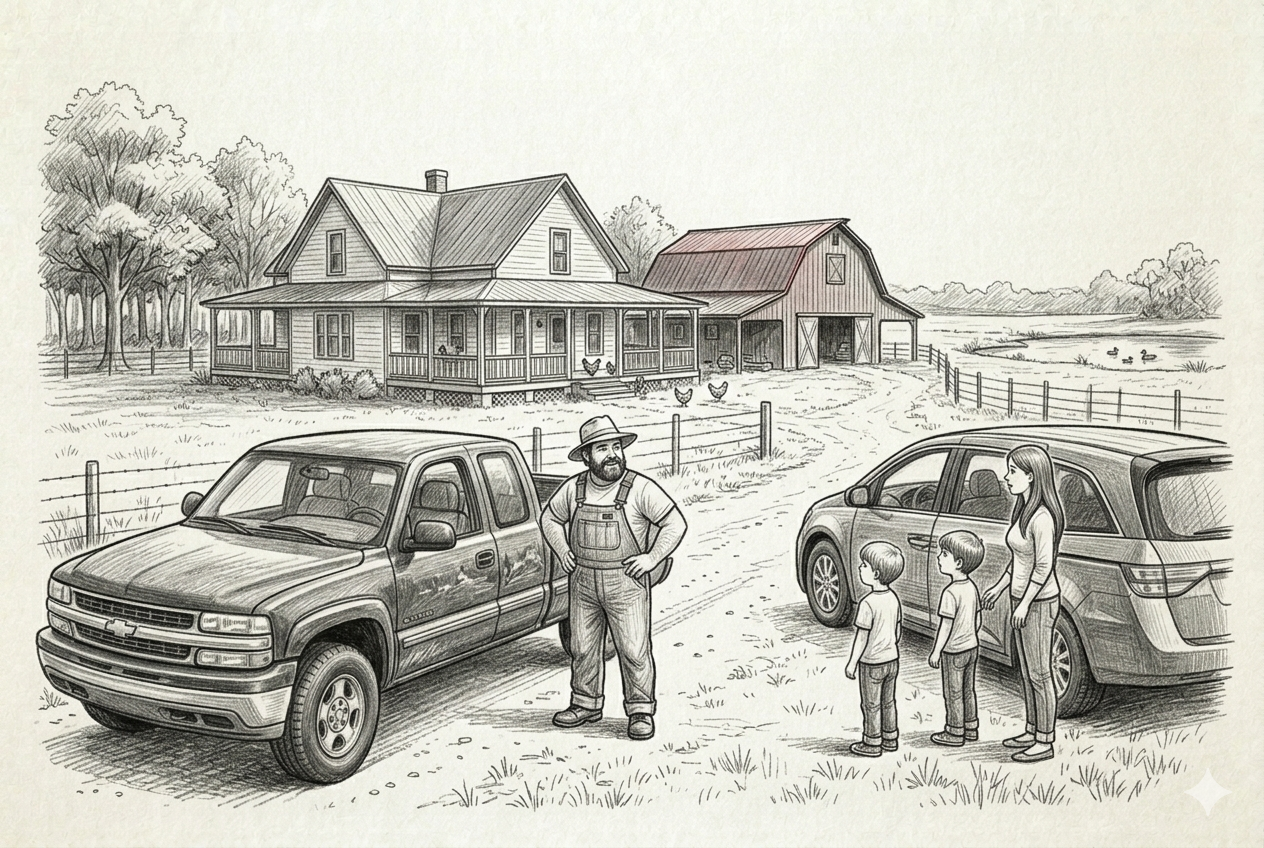
Mom stopped the minivan.
For a long moment, nobody got out.
The boys stared out the windows. The youngest had his hand pressed against the glass. The middle one’s mouth was slightly open. The oldest, in the back, was very quiet, the kind of quiet a six-year-old gets when something is too big to put into words.
Mom looked at it all and felt her throat get tight.
In the truck, Dad just sat there with both hands on the wheel and looked. Just looked. At the house, at the barn, at the dark shapes of the trees, at the pond lying black and still under the first stars. At the place his family was going to live now. At the country he had been pulling toward for almost a year without knowing exactly what he was pulling toward.
Bear did not wait for ceremony.
Bear got to his feet on the truck seat and looked out the windshield at the homestead. His ears came forward. His nose worked. His tail gave another slow thump.
Then he looked at Dad. Just one quick look. The kind of look that, in dog language, means well? are we going to do this or what?
Dad laughed out loud. He opened his door. Bear hopped down, not gracefully but successfully, and put all four paws on East Texas dirt for the first time.
He took two steps. Stopped. Smelled the ground. Smelled the air. Looked around at the trees, the pond, the barn, the farmhouse.
And then Bear, young and dignified and not-yet-Grandpa Bear, did something the family almost never got to see him do.
He ran.
Just a short run. A brown blur cutting across the front yard, ears flopping, all four legs loose and glad and going full tilt. He ran a small loop around the yard, came back, sat down at Dad’s feet, and looked up with an expression that was unmistakably, undeniably:
Yes. This. Here. Good.
The minivan doors flew open and three boys spilled out into the grass. The youngest immediately sat down in the grass and didn’t seem to mind. The middle one took off toward the sound of water he couldn’t quite see yet, already certain the pond was full of something wonderful. The oldest stood very still and just looked at everything, taking it in the way the oldest takes things in. Mom got out of the van and walked over to where Dad was standing with Bear, and she leaned against his shoulder, and neither of them said anything for a while.
The evening got quiet around them. The cold came down with the dark, and the stars came out thick over the tree line. The boys’ voices echoed across the property, the first voices the property had heard from this family, the first of thousands and thousands of voices it would hear in the years to come.
Bear lay down in the grass at Dad’s feet, watching the boys, and let out one final long sigh.
This one wasn’t tired.
This one was home.
Next time: The homestead has chickens. The homestead has ducks. The homestead has donkeys. And one afternoon, Dad pulls up the driveway with a surprise tucked inside his jacket: a wiggling, squirming, impossibly small black puppy who has no idea he is about to become the star of every story this family will ever tell.